

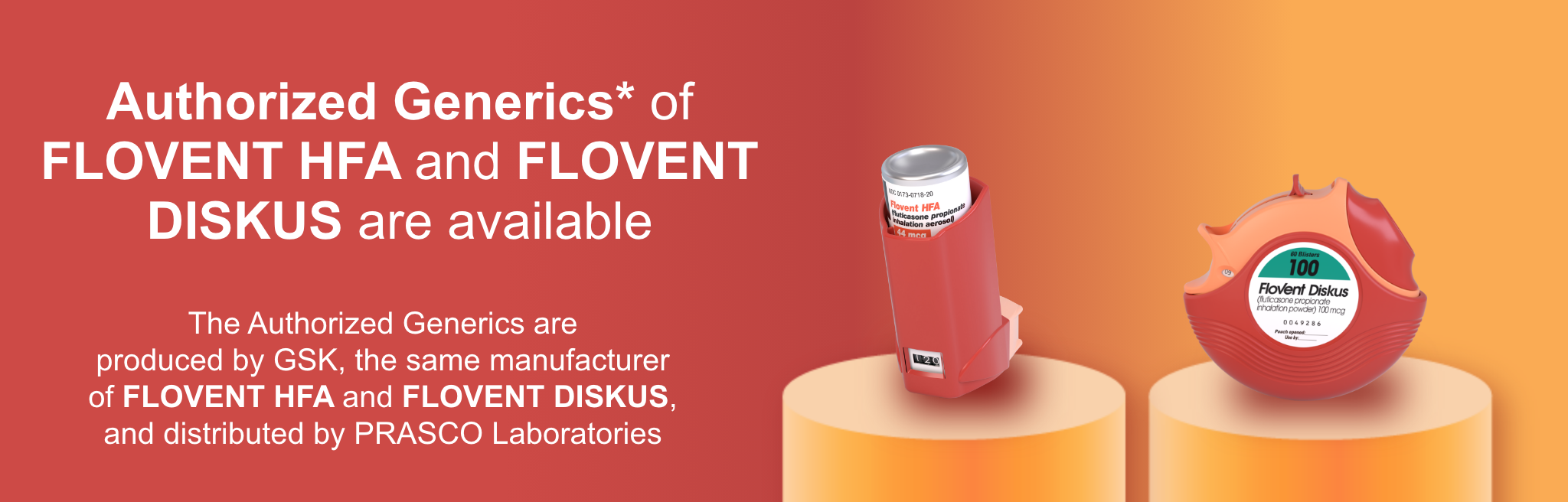
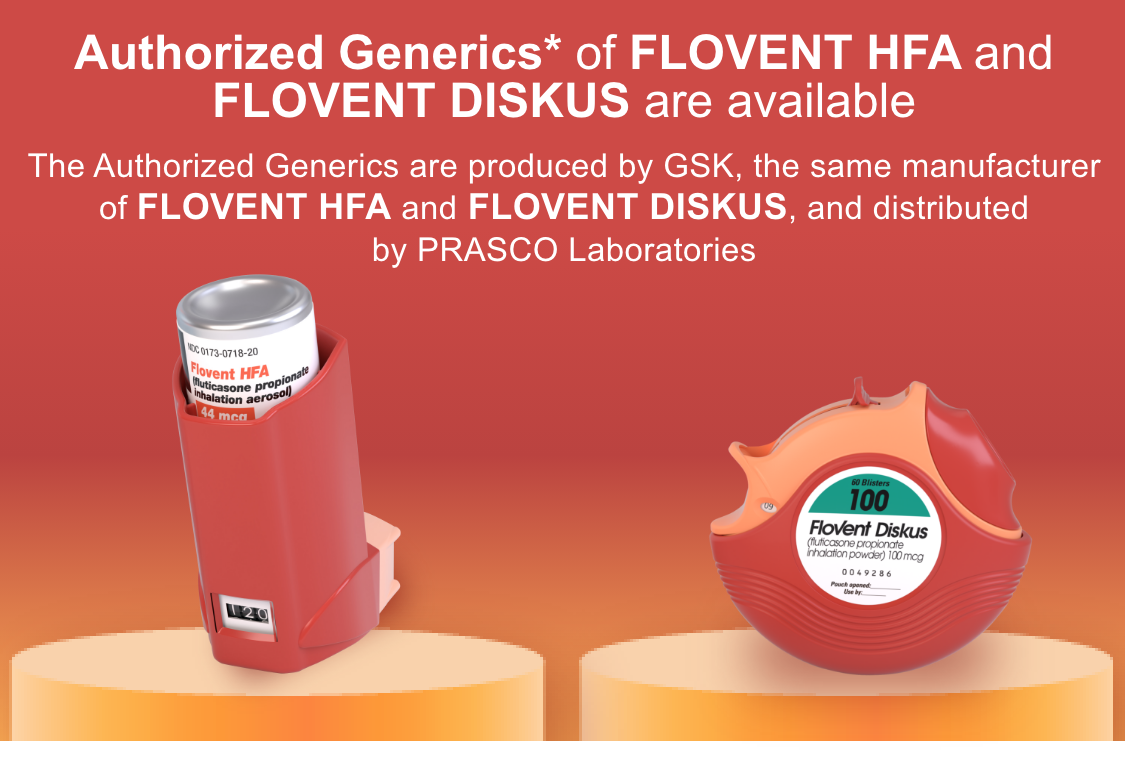
FLOVENT is a prescription inhaled corticosteroid medicine for the long-term treatment of asthma in people aged 4 years and older.
FLOVENT is not used to relieve sudden breathing problems and won’t replace a rescue inhaler.
FLOVENT is a prescription inhaled corticosteroid medicine for the long-term treatment of asthma in people aged 4 years and older.
FLOVENT is not used to relieve sudden breathing problems and won’t replace a rescue inhaler.
FLOVENT is a prescription inhaled corticosteroid medicine for the long-term treatment of asthma in people aged 4 years and older.
FLOVENT is not used to relieve sudden breathing problems and won’t replace a rescue inhaler.
- FLOVENT does not relieve sudden breathing problems from asthma. Always have a rescue inhaler with you to treat sudden symptoms.
FLOVENT does not relieve sudden breathing problems from asthma. Always have a rescue inhaler with you to treat sudden symptoms.
Do not use FLOVENT DISKUS if you have a severe allergy to milk proteins. Do not use FLOVENT DISKUS or FLOVENT HFA if you are allergic to fluticasone propionate or any of the ingredients in the products. Ask your healthcare provider if you are not sure.
- FLOVENT does not relieve sudden breathing problems from asthma. Always have a rescue inhaler with you to treat sudden symptoms.
- Do not use FLOVENT DISKUS if you have a severe allergy to milk proteins. Do not use FLOVENT DISKUS or FLOVENT HFA if you are allergic to fluticasone propionate or any of the ingredients in the products. Ask your healthcare provider if you are not sure.
- Tell your healthcare provider about all the medicines you take and about all of your health conditions.
- Do not use FLOVENT more often than prescribed.
- Do not stop using FLOVENT, even if you are feeling better, unless your healthcare provider tells you to. If you miss a dose of FLOVENT, just skip that dose. Take your next dose at your usual time. Do not take 2 doses at 1 time.
- FLOVENT can cause serious side effects, including:
- fungal infections in your mouth or throat (thrush). Rinse your mouth with water without swallowing after using FLOVENT to help reduce your chance of getting thrush.
- weakened immune system and increased chance of getting infections (immunosuppression). You should avoid exposure to chickenpox and measles, and, if exposed, tell your healthcare provider right away. Worsening of existing tuberculosis; fungal, bacterial, viral, or parasitic infections; or herpes infection of the eye (ocular herpes simplex) may occur.
- reduced adrenal function. This can happen when you stop taking an oral corticosteroid (such as prednisone) and start taking a medicine containing an inhaled corticosteroid (such as FLOVENT). During this transition period, when your body is under stress such as from fever, trauma (such as a car accident), infection, or surgery, adrenal insufficiency can get worse and may cause death. Symptoms of adrenal insufficiency include:
- feeling tired
- lack of energy
- weakness
- nausea and vomiting
- low blood pressure (hypotension)
- fungal infections in your mouth or throat (thrush). Rinse your mouth with water without swallowing after using FLOVENT to help reduce your chance of getting thrush.
- serious allergic reactions. Call your healthcare provider or get emergency medical care if you get any of the following symptoms of a serious allergic reaction:
- feeling tired
- rash
- hives
- swelling of your face, throat, and tongue
- breathing problems
- bone thinning or weakness (osteoporosis).
- slowed growth in children. A child’s growth should be checked often.
- eye problems including glaucoma, increased pressure in your eye, cataracts, or other changes in vision. You should have regular eye exams while using FLOVENT.
- increased wheezing (bronchospasm). Increased wheezing can happen right away after using FLOVENT. Always have a rescue inhaler with you to treat sudden wheezing.
- Common side effects of FLOVENT DISKUS include:
- upper respiratory tract infection
- throat, nose, and/or sinus irritation
- nausea and vomiting
- cough and/or persistent cough
- fever
- headache
- upset stomach
- Common side effects of FLOVENT HFA include:
- upper respiratory tract infection
- throat and/or sinus irritation
- headache
- diarrhea
- difficulty speaking
- cough and/or persistent cough